

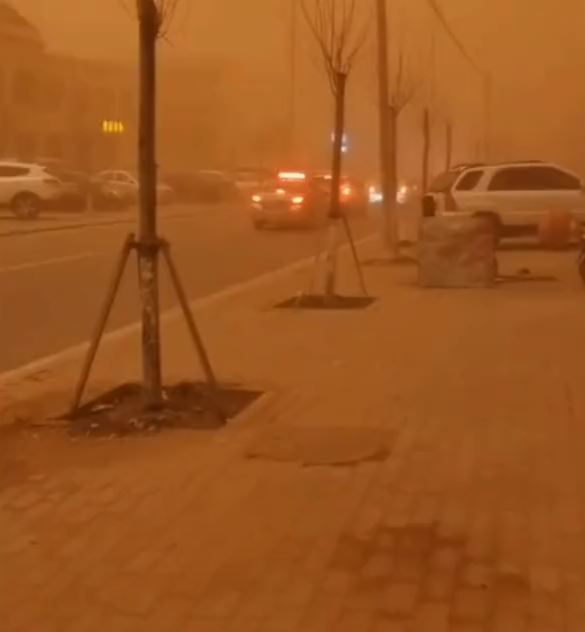
 twitter video capture
While the yellow dust from China hit the Korean Peninsula on the 12th and the cloudy sky continues, astonishing photos and videos of Chinese downtown air are being shared on social media (SNS).
Recently, certified photos and videos of downtown areas trapped in sandstorms have been uploaded on Chinese SNS such as Weibo. In particular, images taken in urban areas such as Ulanchabu City in Inner Mongolia, which is close to the source of yellow dust, look as if a red filter was applied to the camera.
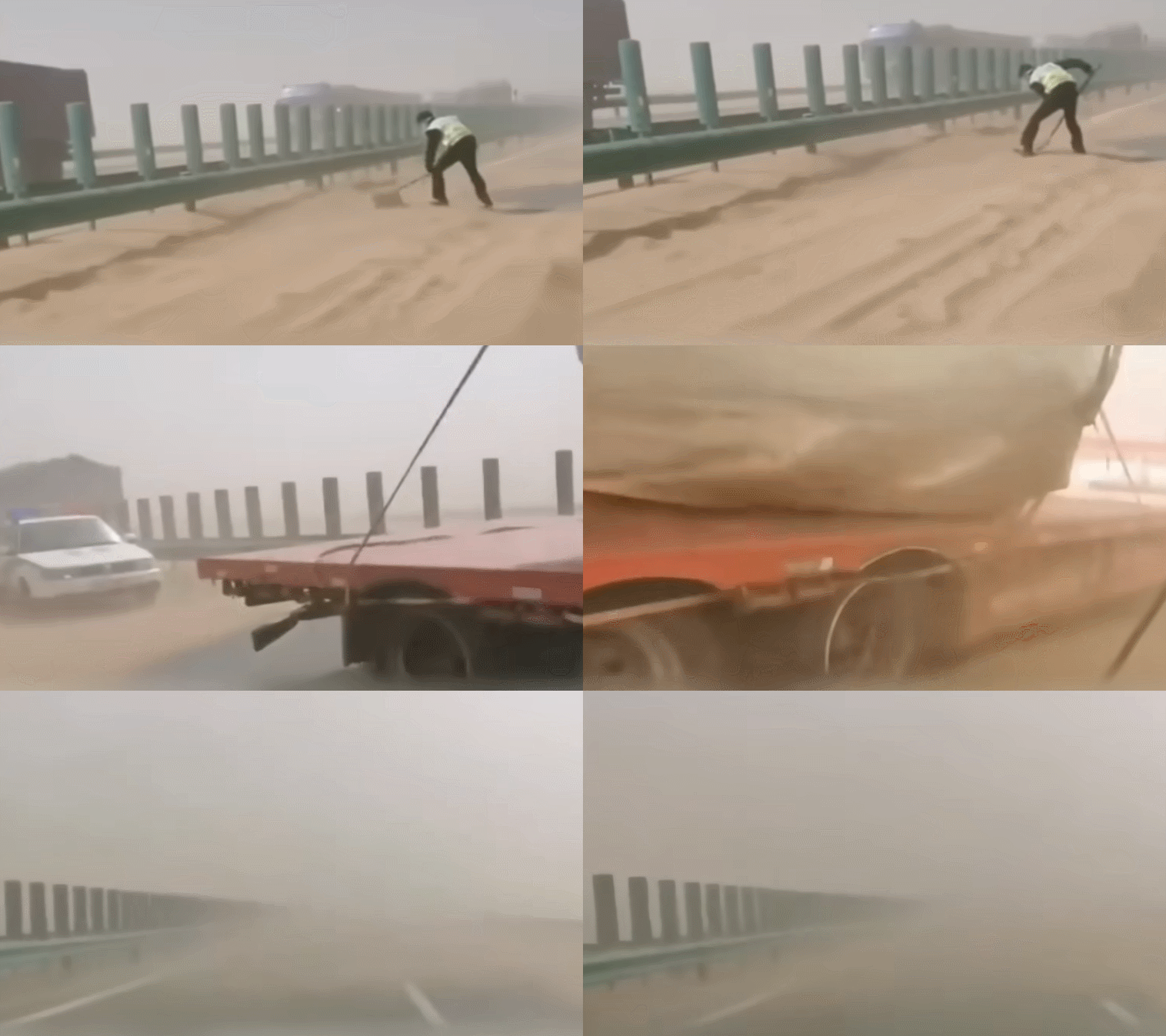
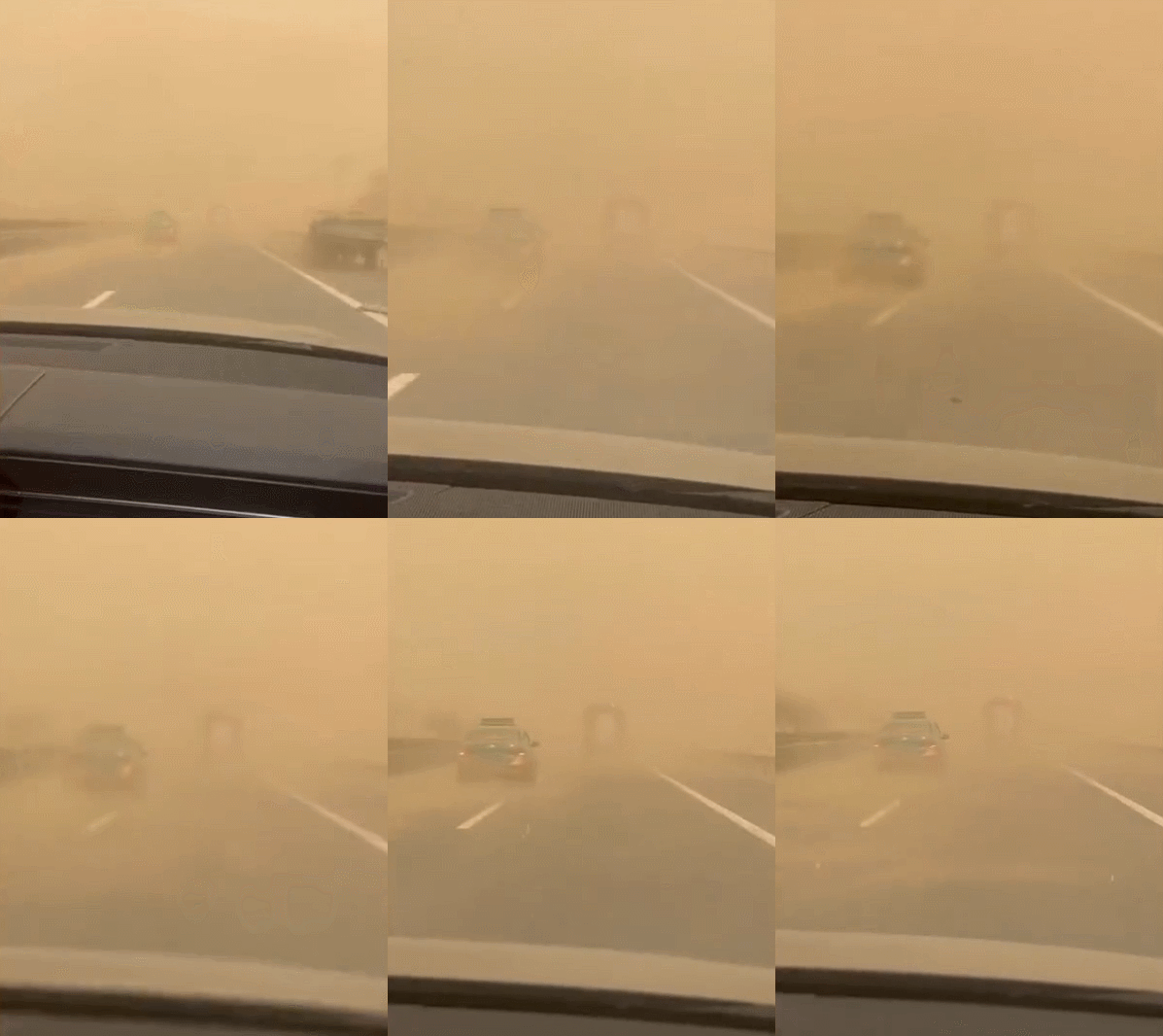 twitter video capture
The sky is red like a scene from a disaster movie, and the daytime street is dark like sunset. The thorns are only tens of meters away, so you can’t even see nearby buildings and cars.
The police try to shovel away the heaps of sand on the road, but it soon piles up again.
 Video taken on the 10th in Wulanchabu City, Inner Mongolia Autonomous Region, China, near the source of the yellow dust. (Sina News)
It is said that it is difficult to even open your eyes or breathe because of the strong wind. Citizens did not cover their entire faces with masks or wore dust masks like gas masks, so they even used plastic bags.
China has already issued a “yellow dust warning” in most major regions, including Beijing, Shanghai and Xinjiang. On the 10th, it was reported that fine dust in Uranchabu City exceeded 7000 μg/m3. It is about 46 times that of Korea.
Beijing also recorded 1450 μg per cubic meter on the same day (12th). It is known that the number is 10 times that of Korea, and even when wearing a mask, sand powder can be chewed in the mouth. The air quality index (AQI) across Beijing recorded a level 6 “severe pollution”, the worst.
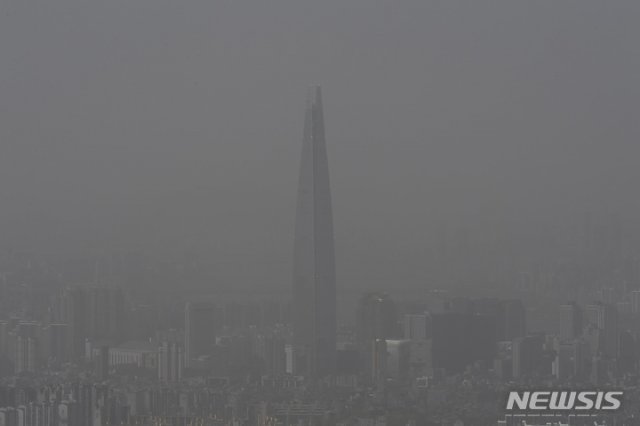
Our country was also trapped in gray dust. According to the Korea Meteorological Administration and Air Korea, fine dust (PM10) in 17 cities and provinces across the country this morning is recording a level of ‘very bad’ (more than 151 μg/m3). The Ministry of Environment raised the national yellow sand crisis alert level from ‘attention’ to ‘caution’ at 7 am.
The yellow dust that swept Korea is expected to spread from the northern part of the Japanese archipelago to the western part. It is expected to affect Korea until the 13th and then escape to the sea east of Japan on the 14th.
Source: Donga

Mark Jones is a world traveler and journalist for News Rebeat. With a curious mind and a love of adventure, Mark brings a unique perspective to the latest global events and provides in-depth and thought-provoking coverage of the world at large.