

The goal is to operate your computer-phone with just your thoughts.
Brain neuroscience startup Neuralink
Brain implant transplant approved by FDA
There are also concerns about the safety of chip implantation.
The first case of a chip implanted in the human brain has been reported. The possibility of an era in which one can operate a computer or smartphone with just one’s thoughts becoming a reality has opened up. Academic circles say it will be a milestone in the development of a ‘brain-computer interface (BCI)’ that connects the brain and computers.
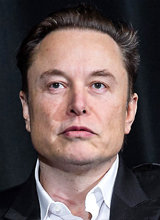
On the 29th (local time), Tesla CEO Elon Musk (CEO, photo) posted on his social media “Neuralink’s first product is telepathy,” he wrote, adding, “You can control almost any device, including your cell phone or computer, with just your thoughts.” He added, “Imagine Stephen Hawking communicating faster than a high-speed typist or an auctioneer.”
Neuralink is a brain neuroscience startup founded by Musk in 2016, and is developing a ‘brain implant’ product that can be implanted into the human brain to read thoughts. Neuralink received approval for clinical trials for brain implants from the U.S. Food and Drug Administration (FDA) in May last year. Afterwards, clinical trial participants were recruited starting in September, and the first patient’s surgery was performed in about 5 months.
Brain implant technology is a technology that recognizes brain signals through electrodes. Nerve cells (neurons) that make up the brain give commands, such as moving an arm or smelling, through electrical signals. According to the brain’s commands, a kind of ‘pattern’ appears in neurons. Neuralink’s chip reads this pattern and transmits it to the computer.
Neuralink’s chip, which is about the size of a coin, has 64 thread-like components as thin as a hair, and has a total of 1,024 electrodes inside them. These electrodes read brain patterns near neurons. According to Musk’s post on X, the first transplant results show that the brain implant is stably reading neuron spikes (electrical signals).
Patients participating in Neuralink clinical trials are quadriplegics who cannot move their arms and legs due to spinal cord damage, or patients with Lou Gehrig’s disease. In theory, by reading brain patterns, you can operate a computer or smartphone with just your thoughts. By transmitting signals from the brain to equipment such as robotic arms and legs worn by patients, patients can move.
Neuralink plans to implant brain implants in 11 people this year, 27 people in 2025, and 79 people in 2026. The goal is to perform 22,000 transplants by 2030. Musk also predicted that in the future, brain implants could become a common surgery like LASIK surgery to treat vision disorders.
However, there are growing concerns about safety as there are suspicions that more than 1,000 sheep, pigs, and monkeys died in brain implant experiments conducted by Neuralink on animals. Last November, four U.S. lawmakers requested the U.S. Securities and Exchange Commission (SEC) to investigate whether Musk intentionally hid the safety of his technology from investors.
Source: Donga

Mark Jones is a world traveler and journalist for News Rebeat. With a curious mind and a love of adventure, Mark brings a unique perspective to the latest global events and provides in-depth and thought-provoking coverage of the world at large.