
The popularity of Ali-Temu and others exceeded 3 trillion won… Half of the overseas direct purchases are from Chinese companies
Shorten the delivery period by increasing the warehouse… Reduce shipping costs by using the post office
Complaints on Ali have increased fivefold in one year.
Mr. Kwak (28), an office worker, purchased cabinets and cleaning supplies directly from Ali Express (Ali) for the first time in December last year. He heard the news that the same product was being sold on Ali at half the price in Korea. Buy 7 items for 33,000 won and the shipping cost is 0 won. Mr. Kwak said, “I visited Ali for cost-effective shopping, and I thought it was worth using because it was delivered within 5 days at the earliest.” He plans to repurchase socks and other items from Ali soon.
Due to the popularity of Chinese e-commerce, which sells ultra-low-price products, the value of direct purchases from China exceeded 3 trillion won for the first time. In addition to the increase in the number of consumers who want ‘cost-effective shopping’ due to high prices, aggressive sales with free shipping also had an impact. The domestic e-commerce industry, including Coupang, is on edge due to the onslaught of Chinese companies on the Korean market.
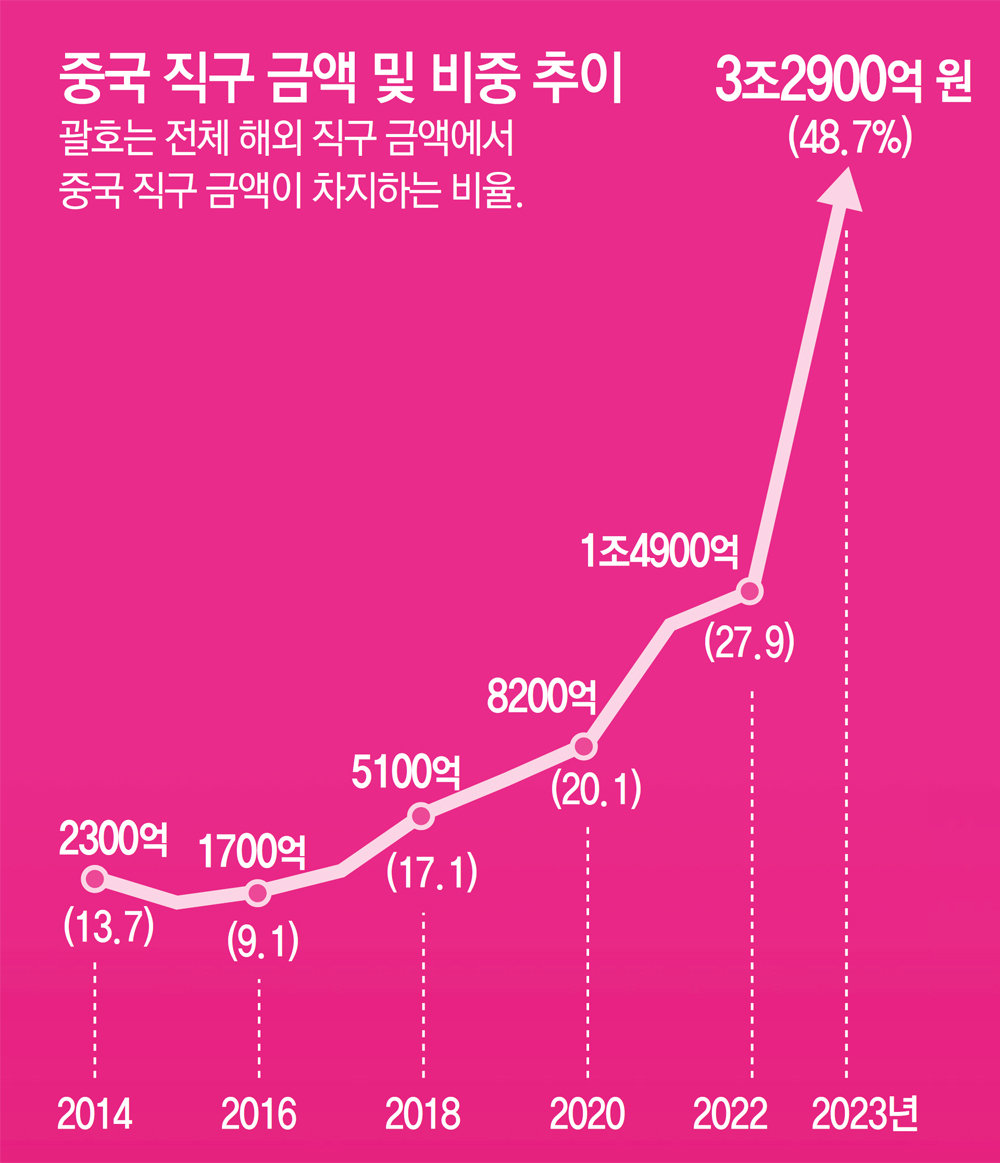
According to the 2023 online shopping trends released by Statistics Korea on the 1st, the amount of online direct purchases in China last year was 3.29 trillion won. It jumped 2.2 times from a year ago (1.49 trillion won) and exceeded 3 trillion won for the first time. The total overseas direct purchase amount was KRW 6.76 trillion, an increase of 26.9% from a year ago, of which nearly half (48.7%) was direct purchase from China.
On the other hand, America’s popularity is gradually fading. The amount of direct purchases in the United States decreased by 7.3% from a year ago to 1.86 trillion won, giving up the top spot to China for the first time. The proportion, which was over 70% just 9 years ago, has shrunk to 27.5%. The amount of direct purchases in Europe, which ranked third after China and the United States, plunged 22.9% to KRW 880 billion.


Among the items purchased directly from China, clothing and fashion products such as clothes, shoes, and accessories were the most popular, with KRW 1.92 trillion (58.4%) being purchased. Home appliances, electronics, and communication devices worth 280 billion won (8.4%), and household and automobile products worth 210 billion won (6.5%) were consumed through direct purchase.
The rapid increase in direct purchases from China can be attributed to the low-price offensive of Chinese e-commerce companies such as Ali, Temu, and Shein, which were well-received by domestic consumers. The decrease in delivery time and shipping costs, which are considered the biggest barriers to direct purchasing, is also behind the rapid increase in the number of Chinese direct buyers. Ali, which has built warehouses throughout China, is stockpiling inventory near ports to ensure quick delivery of overseas orders. We have partnered with CJ Logistics to ensure fast delivery in Korea. It is known that Ali plans to build a logistics center in Korea soon.
Ali and Temu are lowering logistics costs by shipping through the ‘post office’. Because China Post is a state-owned enterprise and receives government support, delivery prices are cheaper than other private logistics companies. Thanks to this, Ali and Temu are able to reduce logistics costs, include those costs in the product price, and lower shipping costs in Korea.
However, there are many consumer complaints about these Chinese e-commerce companies. According to the Consumer Federation of Korea, the number of Ali-related complaints reported to the Consumer Counseling Center last year was 465, a five-fold increase compared to a year ago (93 cases). By type, contract failure, including delayed delivery, incorrect delivery, missing product, and loss during delivery, accounted for nearly half. Controversy over product quality still remains. There are a series of reviews online from consumers claiming that they purchased defective or counterfeit products by mistake.
Jeon Byeong-seo, director of the China Economics and Finance Research Institute, said, “As high prices and polarization intensify, Chinese e-commerce, which uses ultra-low-price products as a weapon, is gaining popularity globally.”
Sejong =
Source: Donga

Mark Jones is a world traveler and journalist for News Rebeat. With a curious mind and a love of adventure, Mark brings a unique perspective to the latest global events and provides in-depth and thought-provoking coverage of the world at large.