

The war between Israel and Hamas, which began in October last year, was found to be having a real impact on the performance of global companies. This means that the conflict in the Middle East is prolonging and is being affected by boycotts and a decline in local advertising sales.
On the 6th (local time), Snap, which operates the social media Snapchat, recorded sales of $1.36 billion in the fourth quarter of last year (October to December), up 5% from the same period last year, but fell short of market forecasts ($1.38 billion). did. The adjusted profit before tax and interest payments (EBITDA) for the first quarter of this year (January to March) was also significantly lower than the market forecast ($33 million), with a loss of $55 to $95 million. Snap’s stock price plunged 32.7% in after-hours trading due to lower-than-expected performance announced after the New York Stock Exchange closed on this day.
In a letter to shareholders, Snap said, “Conflict in the Middle East served as a headwind in the fourth quarter of last year. “The sales growth rate suffered a loss of about 2 percentage points compared to the same period last year,” he said. Snapchat is a social media platform that is particularly popular among young people in the Middle East, and this can be interpreted to mean that advertising sales in that region have decreased.
McDonald’s and Starbucks, major American restaurant companies that previously announced their performance, also revealed that their sales were affected by the war between Israel and Hamas.
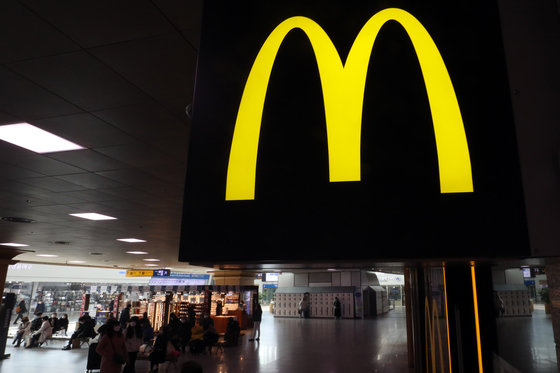 Citizens are walking in front of a McDonald’s store in Seoul. 2021.2.22. News 1
In particular, McDonald’s received backlash from customers who support Palestine because an Israeli licensee offered discounts to its soldiers. According to CNBC, the Middle East region accounts for about 2% of McDonald’s global sales.
McDonald’s CEO Chris Kempczinski said after announcing the company’s earnings the previous day, “Sales were weak in Muslim-majority countries such as the Middle East, Malaysia, and Indonesia.” France, which has the largest Muslim population in Europe, also saw weak sales.
Starbucks, on the other hand, faced backlash from pro-Israel circles when its labor union revealed its support for Palestine. Starbucks CEO Laxman Narasimhan said after announcing last week’s earnings, “The company’s sales were sluggish in the Middle East, but American cafes were also hit hard by the boycott.” In the Middle East and Muslim countries, the ‘American’ brand image was damaged, and in the United States, it was influenced by being ‘misunderstood’ as pro-Palestinian. “We are also working with our licensees to ensure the safety of our employees and customers.” “We are cooperating,” he added.
New York =
Source: Donga

Mark Jones is a world traveler and journalist for News Rebeat. With a curious mind and a love of adventure, Mark brings a unique perspective to the latest global events and provides in-depth and thought-provoking coverage of the world at large.